Arabic is one of the world’s most beautiful and widely spoken languages, with more than 400 million speakers across the globe. Despite this, many parents look at its flowing script and assume it is simply too difficult for young children to learn. In reality, this is a misconception worth setting aside.
Children are natural language learners. When new words are introduced gradually and tied to things they already know — greetings, family, animals, everyday objects — they absorb them with ease and genuine enthusiasm. The moment a child realises they can say “hello,” “cat,” or “book” in a brand-new language, curiosity takes over and confidence begins to grow.
This guide to Arabic words for kids presents 25 carefully chosen Arabic words, ideal for beginners between the ages of five and twelve. The vocabulary is grouped by theme to make learning feel natural, and each entry includes a simple pronunciation guide to help along the way.
Why Start With Simple Arabic Words for Kids?
Language learning works best for children when it feels engaging rather than academic. Therefore, starting with familiar, everyday vocabulary offers several important advantages:
- Quick wins: Learning short words like لا (La) for “no” or شكرًا (Shukran) for “thank you” gives children an immediate sense of achievement.
- Growing confidence: Once a child can recognise كتاب (Kitab) on a bookshelf or greet someone with مرحبًا (Marhaban), Arabic starts to feel familiar rather than something strange.
- Repetition in daily life: Simple words can be woven into normal routines, helping move vocabulary from short-term memory into long-term recall.
- Low pressure: A small, focused vocabulary keeps learning enjoyable and prevents children from feeling overwhelmed or confused.
For young learners, confidence almost always comes before complexity. In other words, getting the first few words right is what opens the door to everything that follows.
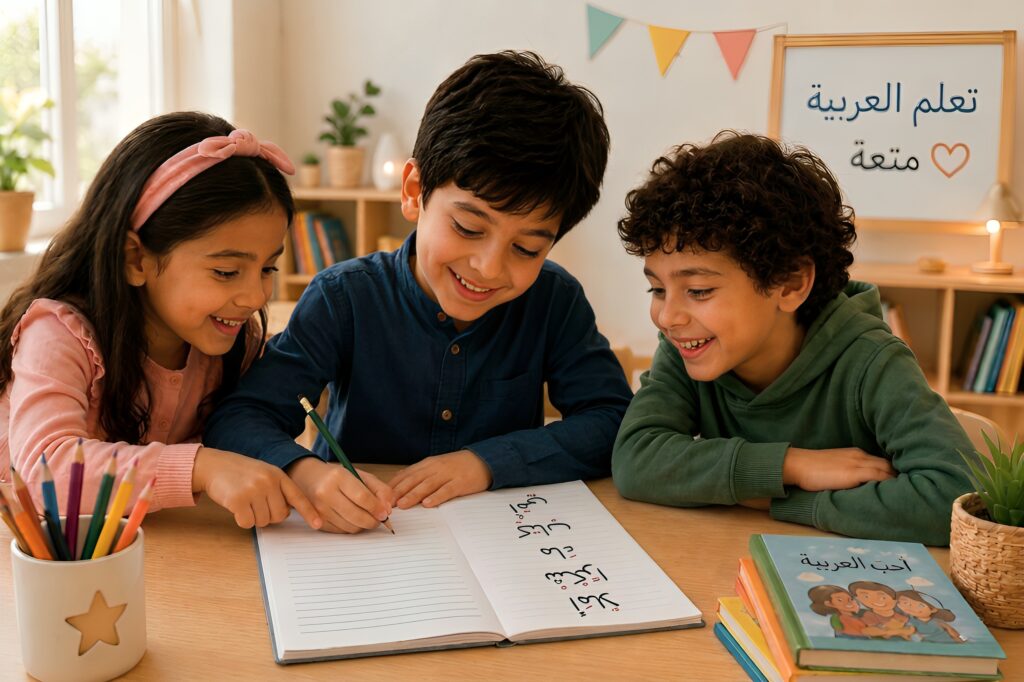
The 25 Easy Arabic Words For Kids
The words below are grouped into seven categories. These are everyday words children can start using right away.
Greetings
These expressions form the foundation of everyday conversation. They’re also usually the first words children love to try out.
- مرحبًا (Marhaban) – Hello
- السلام عليكم (As-Salamu Alaykum) – Peace be upon you
- مع السلامة (Maa As-Salama) – Goodbye
Family Words
Children enjoy learning words for the people closest to them. Family vocabulary is easy to practise naturally at home every day, and these are often among the easiest words for children to remember.
- أم (Umm) – Mother
- أب (Ab) – Father
- أخ (Akh) – Brother
- أخت (Ukht) – Sister
Polite Words
Learning good manners in two languages is always a valuable skill. Polite expressions are among the most useful words children can learn early.
- شكرًا (Shukran) – Thank you
- من فضلك (Min Fadlik / Fadlak) – Please
- عفوًا (Afwan) – You are welcome / Excuse me
Everyday Words
These are practical words children encounter throughout the day. They tend to be remembered quickly because they come up so often.
- نعم (Naam) – Yes
- لا (La) – No
- كتاب (Kitab) – Book
- بيت (Bayt) – House
Fun Words Kids Love
Animals and nature are natural favourites for young learners. These words are short, easy to pronounce, and immediately recognisable.
- قطة (Qitta) – Cat
- كلب (Kalb) – Dog
- شمس (Shams) – Sun
- قمر (Qamar) – Moon
Useful Classroom Arabic Words for Kids
These words help children settle into structured learning environments. They’re especially helpful for children who are starting Arabic classes for the first time.
- ماء (Ma) – Water
- قلم (Qalam) – Pen
- باب (Bab) – Door
- مدرسة (Madrasa) – School
Bonus Words
Finally, these three words help children express feelings and connect with others. Encouraging them to use these expressions daily helps nurture confidence, compassion, and emotional intelligence.
- جميل (Jamil) – Beautiful
- صديق (Sadiq) – Friend
- نلعب (Nalab) – Let us play
🎁 Try a Free Class — No Payment. No Commitment.
Your child’s first class is completely free. See the teaching style, meet the instructor, and watch your child’s reaction — before making any decision at all.
Many parents tell us the free trial was the moment everything clicked — for them and for their child.
Quick Reference Table
Here are all 25 Arabic words for kids at a glance, ready to print or display.
| Arabic | Pronunciation | Meaning |
|---|---|---|
| مرحبًا | Marhaban | Hello |
| السلام عليكم | As-Salamu Alaykum | Peace be upon you |
| مع السلامة | Maa As-Salama | Goodbye |
| أم | Umm | Mother |
| أب | Ab | Father |
| أخ | Akh | Brother |
| أخت | Ukht | Sister |
| شكرًا | Shukran | Thank you |
| من فضلك | Min Fadlik / Fadlak | Please |
| عفوًا | Afwan | You are welcome / Excuse me |
| نعم | Naam | Yes |
| لا | La | No |
| كتاب | Kitab | Book |
| بيت | Bayt | House |
| قطة | Qitta | Cat |
| كلب | Kalb | Dog |
| شمس | Shams | Sun |
| قمر | Qamar | Moon |
| ماء | Ma | Water |
| قلم | Qalam | Pen |
| باب | Bab | Door |
| مدرسة | Madrasa | School |
| جميل | Jamil | Beautiful |
| صديق | Sadiq | Friend |
| نلعب | Nalab | Let us play |
A Simple Pronunciation Guide for Arabic Words for Kids
Arabic includes a few sounds that may be unfamiliar to English speakers. Many beginner words are surprisingly straightforward. Here are a few sounds worth knowing:
- Sh (ش) sounds like the English word “shoe” — as in شمس (Shams).
- Q (ق), as in قمر (Qamar), is pronounced slightly deeper in the throat than the English “k.”
- Kh (خ), heard in أخ (Akh), sounds similar to the “ch” in the German word Bach.
Children adapt to new sounds quickly through listening and repetition. Hearing correct pronunciation from a teacher or audio source makes a significant difference in building early confidence.
Tips to Help Children Remember Arabic Words
Learning vocabulary is only the first step. The next is making those words stick. Here are a few simple, effective strategies.
Use Flashcards
Draw a picture on one side and write the Arabic word on the other. Visual associations make words much easier to recall, and children often find them enjoyable to make themselves.
Label the House
Place small sticky notes on everyday objects — باب on the door, كتاب on a book, قلم on a pen. Children absorb words naturally when they see them throughout the day. Soon, every room in the house becomes a place where curiosity and language grow together.
Play the Switch Game
During meals or daily activities, replace one English word with Arabic. For example: “Can you pass the ماء?” It is playful, low-pressure, and surprisingly effective. It also turns practice into part of the normal day rather than a separate task.
Consistency Over Intensity
Five minutes of practice every day is far more effective than an hour-long session once a week. Short, regular exposure keeps Arabic present in a child’s mind without making it feel like a chore. When learning feels enjoyable, children are more likely to develop a lifelong love for the language.
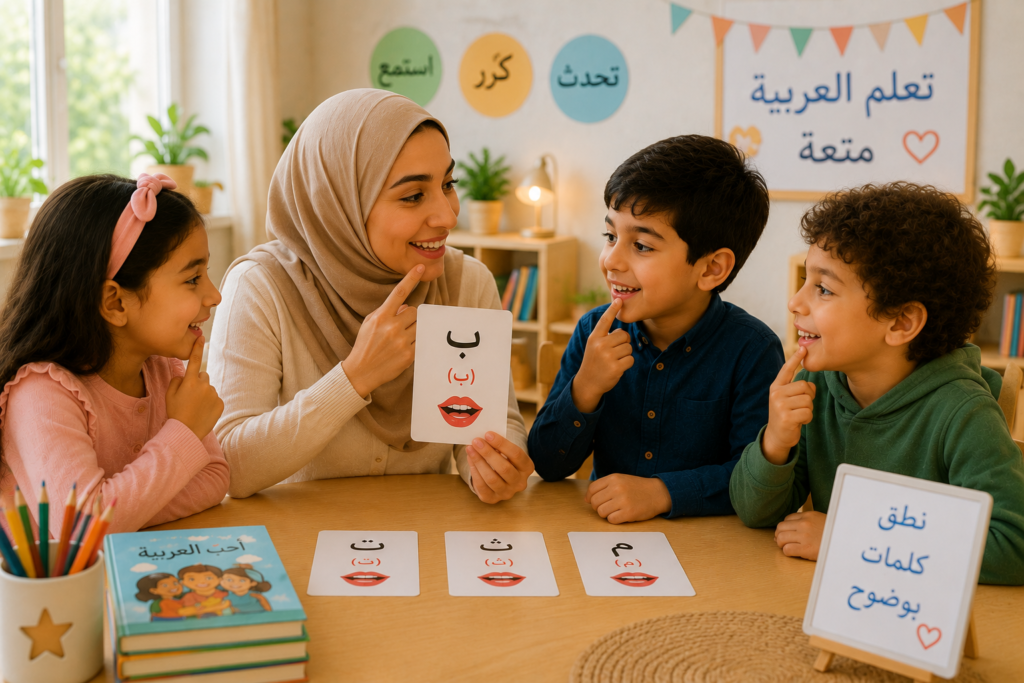
A Fun Arabic Practice Activity
Turn vocabulary practice into a simple game that children genuinely enjoy:
- Write five Arabic words on separate small cards.
- Then place each card next to the matching object around the house.
- Ask your child to walk from card to card and say each word aloud.
For example: كتاب on a book, باب on the door, قلم on a pen. Children remember far more when learning feels like a game rather than a lesson.
🎁 Try a Free Class — No Payment. No Commitment.
You do not need any prior experience. Whether you are a child taking your first steps, a teen building real communication skills, or an adult learning at your own pace — with the right guidance, anyone can start speaking Arabic in a natural and enjoyable way, from day one.
From Single Words to Simple Sentences
Learning individual words is the natural starting point, but it is only the beginning of a life-long journey. As children grow comfortable with their vocabulary, they begin combining words into short phrases — a greeting here, a simple request there and so on.
Over time, this gradual progression leads from individual words to short sentences, and eventually to real, confident conversations. In short, every word learned is a building block for the next stage.
What Comes After Learning the first 25 Arabic Words for Kids?
Once children are confident with this foundational vocabulary, the next natural steps in their Arabic journey typically include:
- Recognising the Arabic alphabet and understanding how letters connect
- Expanding vocabulary to between 50 and 100 common words
- Practising simple greetings and short conversational exchanges
- Reading short Arabic sentences with support
A structured learning environment — one that keeps lessons interactive and age-appropriate — helps children progress steadily. It also ensures they never lose the enjoyment that makes language learning work in the first place.
How Small Classes Help Children Learn Faster
Practising at home is valuable. However, children often make the most progress in an interactive environment where they can speak, ask questions, and receive feedback in real time.
At Lingua Arabia Academy, children learn Arabic through engaging online lessons designed specifically for young learners. Classes are kept to just three students, so every child has time to participate actively, practise pronunciation, and build confidence with guidance from a professional teacher.
This supportive format helps children move naturally and steadily from single words to genuine communication.
Start Your Child’s Arabic Journey Today
Learning Arabic opens doors — to a rich culture, a new way of seeing the world, and opportunities that reach across more than 20 countries. If your child is curious about the language, therefore, there has never been a better moment to begin.
Lingua Arabia Academy offers a complimentary trial class where families can experience the teaching approach, meet the teacher, and find the right learning path for their child. No commitment required — just a chance to see what is possible and the potential that your child can achieve with our support.
Frequently Asked Questions
Is Arabic difficult for children to learn?
Arabic can look complex at first glance. However, children learn languages quickly when lessons start with simple vocabulary and interactive practice. With the right approach, many children begin recognising Arabic words within their very first lessons.
What is the best age for children to start learning Arabic?
Many children begin between the ages of five and twelve. At this stage, they are naturally curious and able to absorb new sounds and patterns with remarkable ease.
How many Arabic words should beginners learn first?
Most beginners do well starting with 20 to 50 common words. These typically include greetings, family members, and everyday objects — exactly the vocabulary covered in this guide.
Can children learn Arabic online?
Yes. Many children learn Arabic successfully online when lessons are interactive and tailored to young learners. Small class sizes give children plenty of opportunities to practise speaking, ask questions, and build confidence in a supportive environment. With personalised guidance and consistent encouragement, they can develop their skills steadily and reach their full potential.
🎁 Try a Free Class — No Payment. No Commitment.
Your child’s first class is completely free. See the teaching style, meet the instructor, and watch your child’s reaction — before making any decision at all.
Many parents tell us the free trial was the moment everything clicked — for them and for their child.
Written by the Arabic Learning Specialists at Lingua Arabia Academy — providing live online Arabic classes for kids, teens, and adult beginners worldwide. Visit us at linguaarabia.com