Is my child too young to start? Too old? Have I already missed the window? If you’ve caught yourself asking these questions, you’re not alone — it’s one of the most common worries parents bring to to our team at Lingua Arabia Academy before enrolling their child in Arabic classes.
Here’s the short answer: there’s no single magic age. Starting earlier does come with real advantages, but it’s rarely, if ever, “too late.” In this article, we’ll walk through what the research actually says, what to expect at different ages, the signs that your child might be ready, and what matters even more than the number on their birthday cake — including how we structure our own classes around exactly these findings.
What Does the Research Say About Age and Language Learning?
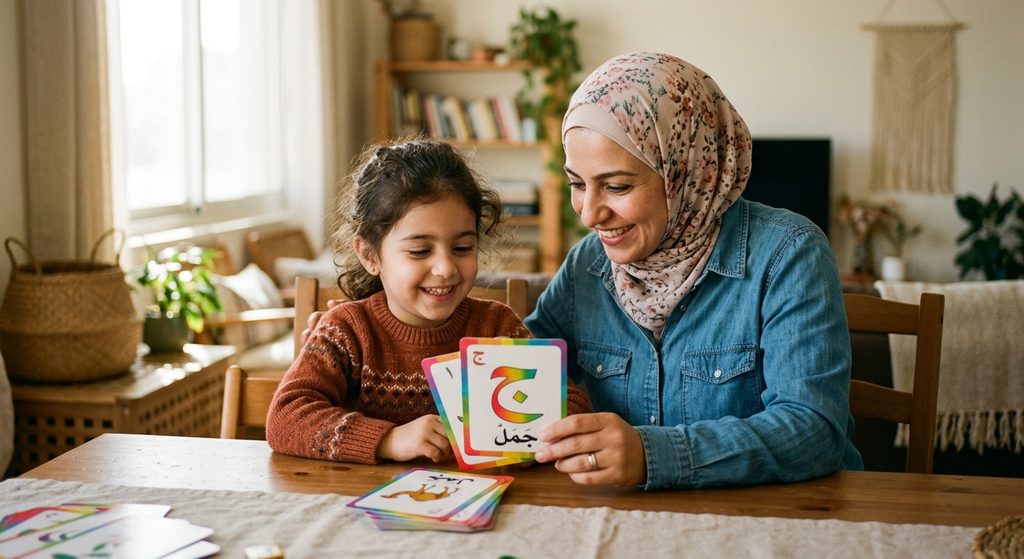
You may have heard of the “critical period” theory — the idea that there’s a window in early childhood when the brain is especially wired for picking up new sounds and language patterns. There’s truth to it: younger children often absorb pronunciation and listening skills more naturally, almost by osmosis, through play, repetition, and everyday exposure.
But that doesn’t mean older kids are at a disadvantage. Research suggests that older children and teens often learn just as effectively — and can even move faster through grammar and reading — because they bring stronger study skills, better focus, and more developed reasoning to the learning process.
The real takeaway: age matters less than consistency and quality of instruction. A five-year-old taking scattered, infrequent lessons may progress more slowly than a twelve-year-old attending structured, regular classes with a skilled teacher.
Curious what level is right for your child? See it for yourself — book a free trial class and let our teachers assess their starting point. No pressure, no payment.
🎁 Try a Free Class — No Payment. No Commitment.
You do not need any prior experience. Whether you are a child taking your first steps, a teen building real communication skills, or an adult learning at your own pace — with the right guidance, anyone can start speaking Arabic in a natural and enjoyable way, from day one.
Arabic Learning by Age Group: What to Expect
Every age brings its own strengths to language learning. Here’s what that typically looks like.
Ages 5–8: Early Starters
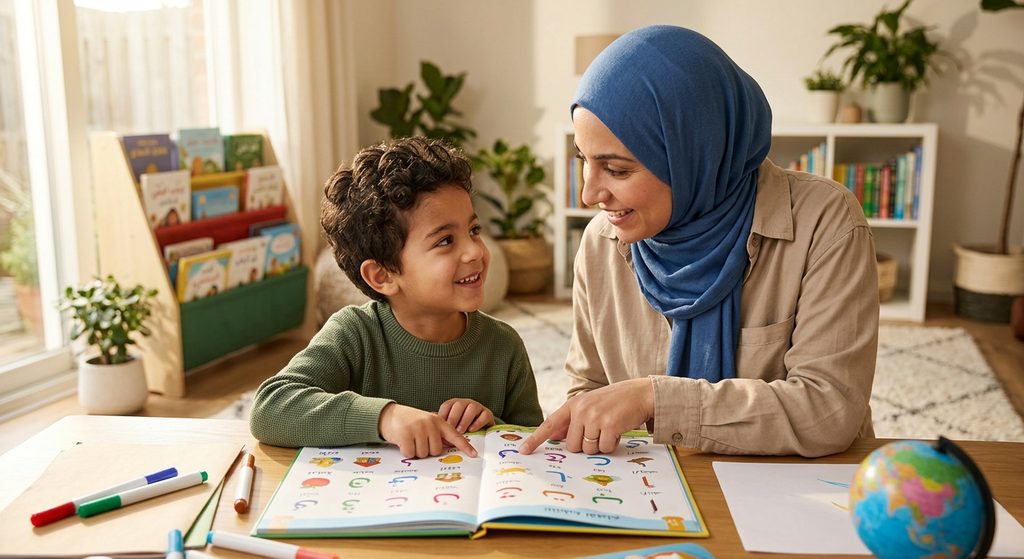
Young children thrive on mimicry and playful learning. They pick up sounds quickly, love games and songs, and often learn the Arabic alphabet almost without realizing they’re “studying.” At this age, success doesn’t look like fluency — it looks like growing vocabulary, curiosity, and confidence using new words. This is exactly one of the age bands that our classes at Lingua Arabia Academy are built around, with lessons led by native-speaking teachers who know how to turn early sounds and letters into a game rather than a lesson.
Ages 9–12: Building Readers and Speakers
By this stage, kids grasp sentence structure faster and can sustain attention for reading and writing in a way younger children can’t yet. This is often when conversation practice starts blending naturally with script and grammar, laying the groundwork for stronger reading comprehension and communication skills.
Teens (13+)
Teenagers tend to be more goal-driven learners. They respond well to real-life dialogue and make fast progress once grammar is presented in a structured way. Many teens are also motivated by something personal — a heritage connection, an upcoming trip, or academic requirements — which can make their learning feel purposeful rather than obligatory.
Whatever age your child is at, there’s a meaningful path forward. The right structure and approach matter far more than reaching a specific birthday before getting started.
Signs Your Child Is Ready to Start
Not sure if now is the moment? A few signs tend to show up when a child is ready to begin:
- Shows curiosity about language, letters, or culture
- Can follow simple multi-step instructions in their native language
- Enjoys songs, stories, or games in other languages
- Has a personal or family motivation — heritage, religion, travel, or school
Keep in mind that “readiness” isn’t a strict checklist to tick off. Most kids can start successfully as long as the teaching approach is suited to them — which is why our teachers at Lingua Arabia Academy spend the first session getting to know a child before deciding how to pace their lessons, rather than dropping every beginner into the same fixed curriculum.
Not sure if your child is ready? The best way to find out is to try a real class. Book a free trial — no payment, no commitment, just a chance to see how they respond.
🎁 Try a Free Class — No Payment. No Commitment.
You do not need any prior experience. Whether you are a child taking your first steps, a teen building real communication skills, or an adult learning at your own pace — with the right guidance, anyone can start speaking Arabic in a natural and enjoyable way, from day one.
What Matters More Than Age
If there’s one thing worth remembering, it’s this: the age your child starts matters far less than the environment they start in. A few things make a bigger difference:
- Instructor quality — native-speaking teachers with real experience teaching children, not just adults
- Consistency — regular, live practice beats sporadic app sessions or videos
- Class format fit — some kids thrive in 1-on-1 sessions with focused attention, while others do better in small groups where they can learn alongside peers
- A supportive, low-pressure environment — one where making mistakes feels safe, which is essential for building early confidence
These aren’t abstract best practices — they’re the exact principles Lingua Arabia Academy is built around. Every class is led by a native-speaking teacher, every child is placed by age and level rather than guesswork, and families choose between 1-on-1 or small-group formats based on what actually suits their child, not a one-size-fits-all default.
How to Start Your Child’s Arabic Journey Today
Here’s the truth: it’s less about finding the “perfect” age and more about simply starting well. At Lingua Arabia Academy, that first step is a free trial class — a chance for your child to meet a native-speaking teacher, get a feel for how our classes work, and for you to see where they’re starting from, without any pressure or payment.
If you’re hesitating over cost, time commitment, or adding more screen time to your child’s week, that’s completely understandable — and worth raising with one of our teachers directly during the trial. Most concerns are easier to work through once you’ve seen an actual class in action.
Conclusion
There’s no perfect age to start learning Arabic — just a right time for your child. Starting earlier brings real advantages, but starting later is far from a lost cause; with the right structure and instruction, any age can succeed. At Lingua Arabia Academy, that structure is what we build every class around, so the best time to begin is simply when your child is curious and you’re ready to support them on their language learning journey.
Ready to see what your child can do? Book a free trial Arabic class today — no payment, no commitment, just a fun first step.
🎁 Try a Free Class — No Payment. No Commitment.
Your child’s first class is completely free. See the teaching style, meet the instructor, and watch your child’s reaction — before making any decision at all.
Many parents tell us the free trial was the moment everything clicked — for them and for their child.
Frequently Asked Questions
Is it too late to start Arabic at age 10? At 13? Not at all. While younger children pick up pronunciation more naturally, older kids and teens often progress faster through grammar and reading thanks to stronger study skills. Starting at 10 or 13 simply means a slightly different approach — not a disadvantage.
How many classes per week should a beginner take? Consistency matters more than volume. Most beginners see steady progress with one to two regular sessions per week, paired with a little practice in between.
Do kids need to know the Arabic alphabet before starting? No — many children learn the alphabet as part of their first lessons, often through games and songs rather than rote memorization.
Written with insight from our team of native Arabic-speaking teachers at Lingua Arabia Academy, each experienced in working specifically with children and teens.